Art and coloring pages for Mardi Gras, Fat Tuesday, and Pancake suppers.
Paid Subscribers and donors can copy and download various sizes for use.


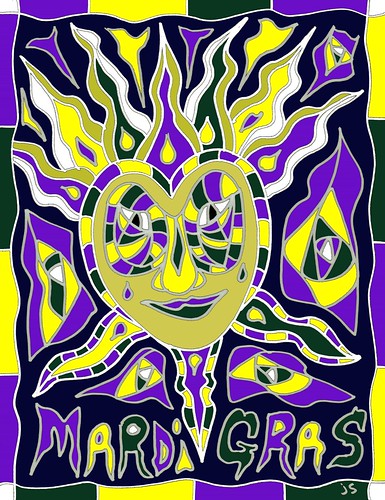


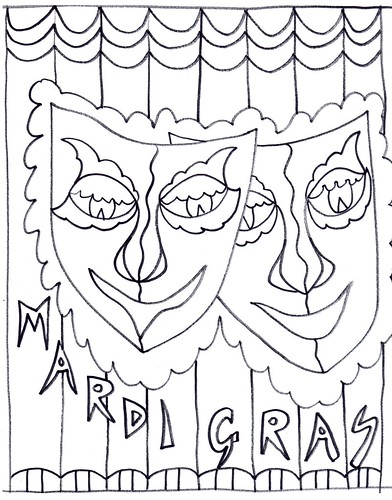
Church bulletin covers and other art by artist Stushie. Unique crayon and digital worship art
Art and coloring pages for Mardi Gras, Fat Tuesday, and Pancake suppers.
Paid Subscribers and donors can copy and download various sizes for use.
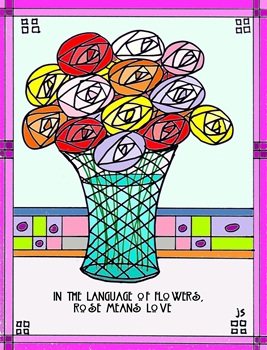 Psalm 99:5 Exalt the LORD our God and worship at His footstool; He is holy.
I think that my brother Alan is the most caring sibling in our family. He doted on my mother and took special care of her when she was ailing. He took time to wash her hair and make her comfortable. Alan and his partner, who is also called Alan, took her out for car trips that she enjoyed. He visited her in hospital constantly when she was admitted to long-term wards. He was gentle and loving with her, never seemingly getting frustrated or angry at her, even when she was at her most difficult.
Alan even washed her feet and gently massaged them. She suffered terribly from rheumatics, and sometimes just touching her feet could have her crying in agony. My brother patiently and tenderly took care of her, even making sure that she had a cushioned footstool to rest her weary and painful feet.
A footstool is a humble piece of furniture that provides rest for a weary person. It’s mentioned in Psalm 99, so does this mean that God sometimes grows tired and needs to rest His weary feet? No, of course not. In this case, the footstool is used as a majestic symbol of the promises God makes to His people. They rest assured, knowing God will keep those promises and abide by them, even when the people roast His heart and try His patience. This is why they worship at His footstool, which means that they humbly and reverently praise God for keeping His promises.
Today, we can do the same. In our busy lives, we sometimes get spiritually weary, causing our faith to weaken and become ineffective. During those moments, we are invited to come and worship at the Lord’s footstool in order to rely on God for strength, to look to Him for renewal, by holding on to His promises. If we make time to do this, God will make time to help us.
Point to ponder: What can I bring to God’s footstool today, to be relieved of my burden and refreshed in my soul?
Prayer: Almighty God, today we worship at Your footstool, placing all our hopes and dreams, aims and goals, as well as our times and lives into Your care. We pray that You will be patient and tender with us, so that You can help and heal us. We make these prayers, resting on Your promises and in the Holy Name of Jesus. Amen.
John Stuart is a Scottish Presbyterian pastor living in Knoxville, Tennessee.
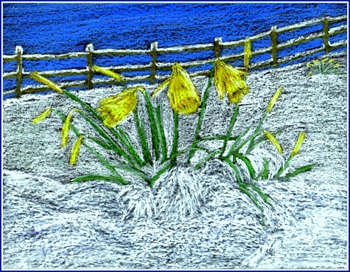 Psalm 32:7 You are my hiding place; you will protect me from trouble and surround me with songs of deliverance. (NIV)
There is a lot of uncertainty in today’s world which is currently causing many people to retreat inside of themselves, by becoming emotionally distant from those things beyond their control. As Thomas Paine once remarked, “these are times that try men’s souls,” which means that current crucial issues are adding to our anxiety and stress. In order to endure this critical time, some folks are sheltering and hiding themselves from watching the news, reading political articles, or getting involved with others on social media. It’s a survival mechanism which helps them cope and focus purely on their daily lives.
The writer of the 32nd psalm also experienced a similar time of turbulence and turmoil. The author wanted to retreat from the world, but instead of isolating himself, he chose to let God be his hiding place. He knew that he personally couldn’t change what was happening all around him, but he understood that God was still in control. So, the psalmist chose to hide himself in the presence of God to seek safety and sanctuary, solace and support.
Over the centuries, faith has always been more resilient than fear. We can read and take encouragement from what the psalmist wrote thousands of years ago because the word and promises of God have remained with us and sustained each subsequent generation as the years passed. Finding a refuge, a hiding place, a haven of strength and renewal is essential for all of us to endure and overcome our present troubles. We may be shaken by current events, but God remains solid and dependable, present and reliable, so let choose to keep persevering by sustaining our faith, hope, and love in God. Or as the apostle Paul would write centuries after the psalmist:
Romans 8:38-39 For I am convinced that neither death nor life, neither angels nor demons, neither the present nor the future, nor any powers, neither height nor depth, nor anything else in all creation, will be able to separate us from the love of God that is in Christ Jesus our Lord. (NIV)
Point to ponder: How can my faith in God overcome my fear of the world?
Prayer: Lord God, You are almighty and sovereign of all things. During these critical times, allow us to shelter in Your loving arms and be strengthened by Your constant presence. In Christ’s Name, we pray. Amen.
John Stuart is a Scottish Presbyterian pastor now living in Knoxville, Tennessee.
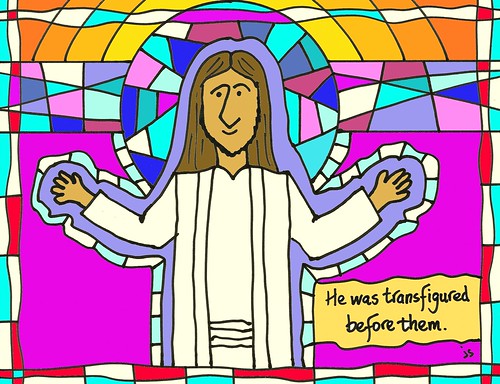
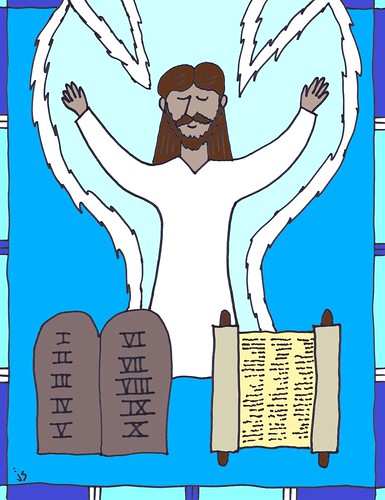
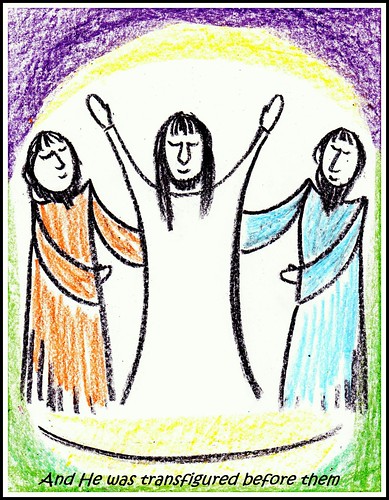
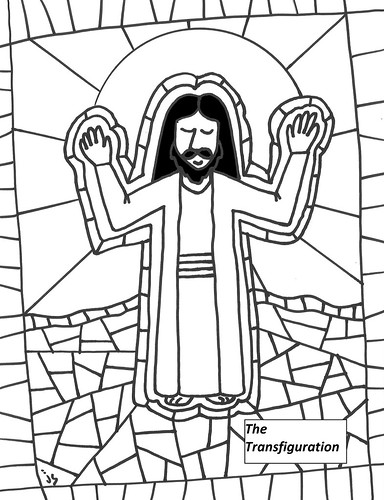
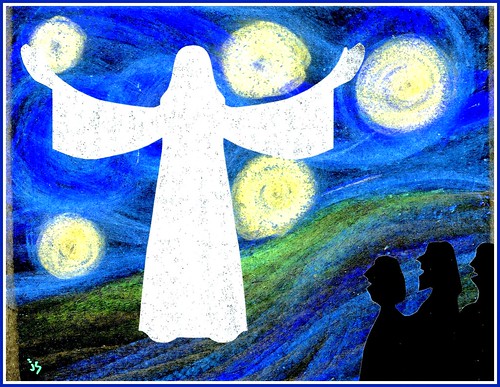
Art and coloring pages for Transfiguration Sunday.
Paid subscribers and donors can copy and download various sizes for use.




 Midweek Message – Finding the Light
Psalm 27:1 The Lord is my light and my salvation—whom shall I fear? The Lord is the stronghold of my life—of whom shall I be afraid? (NIV)
Psalm 27 is one of my favorite passages in the Bible. It’s written by someone who is facing difficult circumstances, but instead of being overwhelmed by his current crisis, he confidently turns to God as the source of his well-being and strength. He calls God his light and salvation which means that although the psalmist is undergoing some dark moment in his life, God will be the One who safely leads him through it. Instead of being fearful, the writer remains faithful; rather than being afraid, he is confident about his future.
Even though the psalm was written about three thousand years ago, it still offers us hope today. As we go through this uncertain time, we can look to God for guidance and confidence. Those ancient words are just as true now as they were way back then, so when we read or pray them, they become living promises for each of us, to strengthen and sustain us through this critical moment in history. This is what makes the Bible relevant in our daily lives and is why reading and reflecting on the scriptures remains meaningful. God’s Word helps us to rely on His support and be encouraged in our time of need.
So, today, dear friends, please embrace and share this thought: The Lord is our light and our salvation—whom shall we fear? The Lord is the stronghold of our lives—of whom shall we be afraid?
Point to ponder: What is really worrying me at this moment in time? Am I willing to trust God with my concerns?
Let us pray: Thank You, Lord, for preserving the ancient Hebrew psalms over the centuries. Though they were faithfully written long ago, they still speak to our present situation, offering us encouragement and hope. In Christ’s Name, we confidently pray. Amen.
John Stuart is a Scottish Presbyterian pastor living in Knoxville, Tennessee.
A woman anoints Christ’s feet with oil and tears.
Paid subscribers and donors can copy and download various sizes for use.


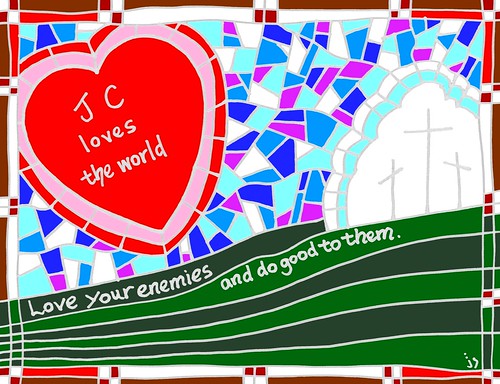
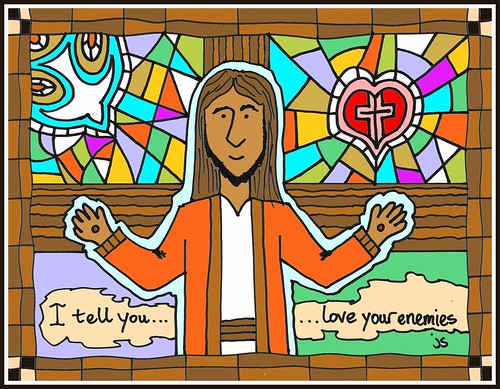
Ordinary 7C – Epiphany 7C art for bulletins, worship screens, and coloring pages.
Luke 6:27-38 and Psalm 37
Subscribers and donors may copy and download for use.





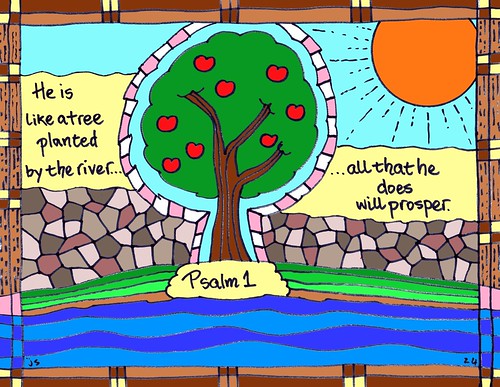
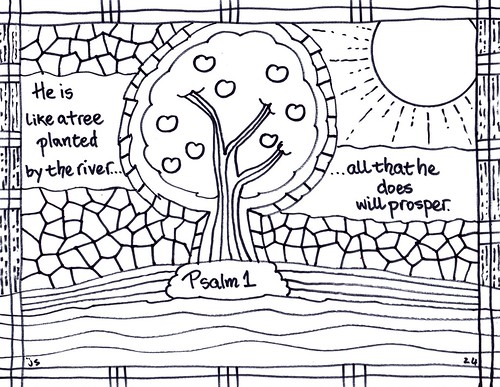
 Psalm 1:3 He is like a tree planted by streams of water, which yields its fruit in season and whose leaf does not wither. Whatever he does prospers.
I studied the Old Testament and Biblical Hebrew for four years at Glasgow University in Scotland, focusing mainly on the psalms. Eventually, after much studying, I came to believe that the very first psalm is a prologue to the entire book of psalms, much like one of those Shakespearean discourses at the beginning of his plays.
To me, this psalm represents the ancient belief that if you are a good person, then you will prosper, and the source of that prosperity comes from God, who is very pleased with you. In other words, Psalm 1 is the theological and theoretical framework for what some would call ‘the prosperity Gospel.’ However, as we read the rest of the psalms, we begin to recognize that there are many flaws with this connection of faith to fortune as expressed in the first psalm.
Even Jesus refuted this kind of prosperity thinking because it led people to believe that if they were wealthy, powerful, and successful, then their faith and lives must be perfect, too. However, in reality wealth, power, and success were merely coincidental because in Christ’s day the most powerful, successful, and wealthy people were also the biggest and cruelest pagans in the world – the Romans.
So, how does this psalm influence our beliefs today? If we read and compare it to Psalm 73, it will show us the difference between theoretical concepts and practical reality. Faith does not prevent difficulties or ensure success; however, it can help us cope in times of trouble and simultaneously strengthen our relationship with God. In other words, it’s our faith that prospers, not our finances.
Point to ponder: How does my faith in Christ affect my life and work?
Prayer: Lord Jesus, You know the old saying, ‘we are not called to be successful, but faithful.” Enable us to truly understand this message. If our faith was meant to reward us, then the symbol of Christianity would be a golden scepter instead of a wooden cross. Help us to be content with everything by remembering that Your Spirit is with us no matter who we are, where we are, and what we experience. In Your Holy Name, we humbly pray. Amen.
John Stuart is a retired Scottish Presbyterian pastor now living in Knoxville, Tennessee.
Narrative Lectionary – John the Baptist is told about Christ’s miracles.
Paid subscribers and donors can copy and download various sizes for use.


Luke 6:17-26 – Jesus teaches the beatitudes art and Psalm 1 art.
Paid subscribers and donors can copy and download various sizes for use.





 Stushie Art