Sabbath Psalms – Sins of Omission

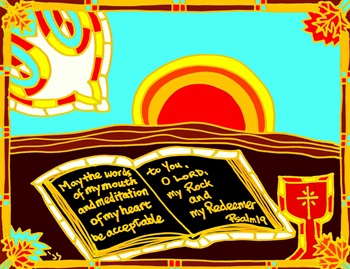
Psalm 019sPsalm 19:12 Who can discern his errors? Forgive my hidden faults.

I once was given the opportunity to teach two English literature classes in my daughter’s High school class. It all came about when her teacher referred to Britain as ‘England.’ My daughter took offense at this and reminded her teacher that Britain is made up of several nations, which includes Scotland. Thankfully, her teacher accepted what she had to say and, in the ensuing conversation, I somehow got volunteered to teach two classes about Scotland’s contribution to English literature, especially the works of Robert Burns, the world’s greatest poet.

This highlighted verse from the psalmist reminded me of something that Burns once wrote. The psalmist talks about hidden faults, and how each of us are blind to some of the persistent mistakes that we make. In the past, ministers would call these the ‘sins of omission,’ the things that we neglect to do, as well as the mistakes that we unconsciously commit. In one of his poems, Burns put it this way:

‘O the pow’r that God wad gie us, to see ourselves as ithers see us.’

(O the power that God would give us, to see ourselves as others see us)

Sometimes, we are blind to the sins we commit and the mistakes that we habitually make. If only we had the power to see ourselves making those mistakes, which others around us notice, for then we would be empowered to avoid repeatedly making them.

Perhaps today we could all make a conscious effort to watch what we do or say; to be careful about the witness to Christ that we project, to be aware that we are not perfect all of the time. And at the end of the day, as we make our confessions and give thanks to God in prayer, let’s also remember to ask forgiveness for our hidden faults, those sins of omission that we constantly fail to recognize.

Point to ponder: What sins do I constantly repeat? How can I change this?

Prayer: Lord Jesus, sometimes we unknowingly hurt other people and offend You with our frequent mistakes. Sometimes the things we say and do, or the things we neglect to say or do, cause us to disappoint others and sin against You. Help us to recognize our recurring mistakes and give us the ways and means to avoid our sins of omission. In Your Holy Name, we pray. Amen.

John Stuart is a retired Scottish Presbyterian pastor now living in Knoxville, Tennessee.
Sunday Shorts – Prejudice and Prayer

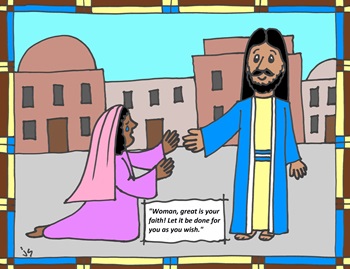
Ordy 23BsMark 7:26 The woman was a Greek, born in Syrian Phoenicia. She begged Jesus to drive the demon out of her daughter. (NIV)

Years ago, just after my family had moved with me to the United States from Scotland, one of my daughters had a bad experience. A girl that she played with at school fell out with her one day and the two of them got into an argument. At one point in the heated conversation, the girl who had been my daughter’s friend suddenly shouted out, “You’re no friend of mine. You’re just a dirty little foreigner.” It hurt my daughter immensely and she cried about it for days.

It was a very cruel thing to say which is why years later all of our family constantly defends the right of immigrants coming into the United States and being treated fairly and respectfully. Whenever we hear or read of others being castigated just because they were born in a different country, we confront that inhumanity. It’s also sad to see some of our friends in the UK also condemning foreigners, especially boat people who are desperate to find safety and asylum in Britain. It makes me wonder about how we’ll be received at the gates of heaven after death because we’ll be hoping to be let in to God’s Eternal Kingdom. How we treat foreigners on Earth may be the same standard that God applies to us when we ask for eternal sanctuary!

When I read the Gospel story in Mark 7 about the Syrophoenician woman who begs Jesus to heal her daughter, I admire her tenacity. At one point, Jesus appears to call her a foreigner who is not worthy of His consideration. Despite this setback, the distraught mother pleads with Christ to cure her child. It’s this persistence that amazes Jesus and He compassionately agrees to heal the young girl.

Tenacity and perseverance are two qualities that faithful, prayerful people possess. I’ve admired Christians who are prayer warriors in their communities and whose words of constant intercession have changed lives through Christ’s spirit. As Lord Tennyson once wrote, “There are more things wrought by prayer than the world dreams of.”

Point to ponder: How prayerful am I? Do I believe that prayer actually changes things? Have I any prejudices that I should be concerned about?

Prayer: Lord Jesus, every day we bring to You our prayers, but sometimes we take you for granted or we casually list our concerns to You. Help us to understand the true power and potential of prayer. Enable us to use it effectively in our faithful lives. In Your Holy Name, we sincerely pray. Amen.


John Stuart is a retired Scottish pastor now living in Knoxville, Tennessee.

Sabbath Psalms – Doing Good

Psalm 125sPsalm 125:4 Lord, do good to those who are good, to those who are upright in heart. (NIV)
The great Jewish scholar of the 20th century, Martin Buber, once said that atheists exist to show religious people how to be good. Their acts of charity and humanity are not done to please God or to fulfill a religious obligation. Atheists help others because they are genuinely concerned about the needs of vulnerable people and are not looking for any reward in return. Buber concluded that if religious people wanted to honestly help others, they should do it as if God didn’t exist, making themselves responsible for the wellbeing of their fellow human beings.

It is a very challenging thought and if today’s verse is to be applied that way, it means that religious people should pray for those who do good in their communities no matter what religion they follow, or even if they follow none at all. Far too often we promote our own congregational or denominational missions and proudly revere them as badges of compassion and courage which honor our sectarian beliefs and churches. But what about the numerous good works that take place outside of our faith communities? Shouldn’t we also seek ways to support and honor them for what they positively accomplish? And, according to this highlighted verse, shouldn’t we be asking God to bless their good works too, liberating ourselves from the narrow notion that only God-fearing people can achieve things which please God?

In our present broken and divided world, we need to change what we’re doing and see other people in a different light. Just because they don’t believe in what we believe, doesn’t mean to say that we should belittle their good deeds or castigate them for being atheists. They may be doing more to make the world a better place through their sincere compassion than we can with our rigid religious rules. As Martin Buber pointed out last century, they may still be able to show us how to be good and do good things in our community and the wider world.

Point to ponder: Which charities do I support outside my church?

Prayer: Lord Jesus, challenge our narrow-minded ways and grant us a new vision of where good is being done beyond our churches. Help us to be mindful of the good causes in our communities that could also do with our support and love. In Your Holy Name, we pray. Amen.

John Stuart is a retired Scottish Presbyterian pastor now living in Knoxville, Tennessee.

Sunday Shorts – Our Own Rules

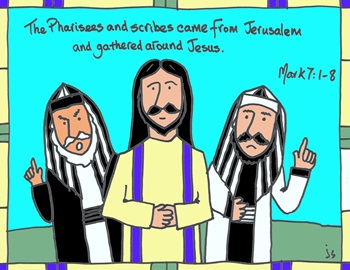
Ordy 22BsMark 7:8 “You have let go of the commands of God and are holding on to human traditions.” (NIV)

One of the biggest things that Jesus had to contend with was the fact that some contemporary religious groups had made up their own rules and regulations about applying their faith rather than following the simple commands of God. Take the Pharisees, for instance. They had taken God’s laws about working on the Sabbath to an absurd degree so that if you had a false tooth and kept it in your mouth during the Sabbath, you were actually carrying something which was vehemently prohibited and considered to be a blasphemous breaking of God’s command. Rules like that enabled the Pharisees to consider themselves spiritually superior as they fanatically followed them; everyone else was imperfect and sinful, unworthy of God’s blessing.

When Jesus appeared, He questioned these absurdities and exposed the hypocrisy of the Pharisees. This is why He said they were more into following and idolizing their own rules rather than humbly applying God’s commands. And the more that Jesus pointed this out, the more religious enemies He encountered. Christ was upsetting their rigid religious hold over the people by setting them free with loving commands and compassionate teaching.

Thank goodness we’re not like those absurd Pharisees, right? Wrong!

When Christians become hateful and harass others who are different, marginalized, or foreigners, they are following their own traditions rather than Jesus. When pastors preach about crushing or killing their political enemies, they are making up their own faith and have departed from Christ’s compassionate teaching. When church members support lying leaders and excuse their false statements, they have let go of the commands of God and are supporting the Father of all lies. And when Christian people embrace false conspiracies and pass on wrong untruthful messages or memes, they are worshiping absurd and dangerous ideas for which they will be judged by Jesus for their careless words and sinful statements. Being a Christian does not excuse us from being held responsible; being followers of Jesus does not pardon our prejudice. When we let go of the commands of God and hold on to human traditions, we are putting our souls in jeopardy from which only confession and repentance will be the remedy.

Point to ponder: Am I guilty of following false ways? If so, am I willing to repent?

Prayer: Lord Jesus, sometimes we think that You approve of everything we believe, say, or do. We want You to do our bidding or agree with our understanding. Reveal to us our sinful ways and help us to regrasp and apply the simple commands of loving God and one another. In Your Holy Name, we humbly pray. Amen.

John Stuart is a retired Scottish Presbyterian pastor now living in Knoxville, Tennessee.

Sabbath Psalms – Love and Hate

Psalm 045sPsalm 45:6 Your throne, O God, will last for ever and ever; a scepter of justice will be the scepter of your kingdom. (NIV)
I like the ancient word that is used in this verse for ‘justice’. In Hebrew, it’s ‘misor,’ which refers to something that is geographically flat like a plain or level like a plateau. It’s the equivalent of us talking about fairness where everyone is given an equal opportunity because we’re all on the same level playing field. There is no advantage given to anyone because of their strength, esteem, or power. Everybody is treated the same, so that justice can prevail. There is no special favor or consideration given to one group over another. Justice occurs truthfully and honestly, which is why some courts have a statue of justice being blind. There is no favoritism or patronage given; justice impartially seeks the truth which is why it is a symbol of God’s everlasting sovereignty.

In a world that is beset with powerful liars and chronic misinformation, the truth can often be buried under a mountain of lies. People are manipulated by brazen leaders who twist the truth into what their followers want to hear, no matter how absurd it sounds. It’s a form of evil that repulses God and damages the world. Blindly accepted absurdities can turn into acceptable atrocities where justice is ignored, and prejudice is fully displayed. The terrifying lynchings in our own recent history testify to the wickedness of ordinary people who were absolutely convinced they were supporting and doing the right thing.

If justice is a symbol of God’s sovereignty, then there will come a time when all of those liars, manipulators, and unconstrained leaders will be made accountable in eternity, as well as those who blindly followed them. The misor of God will level and expose everything, so those who should have known better or who deluded themselves will also be held accountable for ignoring the truth and embracing evil.

Point to ponder: What does justice mean to me? Is it the same as what it means to God? Am I guilty of following liars and spreading lies?

Prayer: Lord Jesus, help us to see the world through Your eyes and to seek God’s justice across this planet. Encourage us to express the truth in the face of lies and to confront corruption with faith, hope, and love. In Your Holy Name, we pray. Amen.

John Stuart is a retired Scottish Presbyterian pastor now living in Knoxville, Tennessee.

Sunday Shorts – Choices

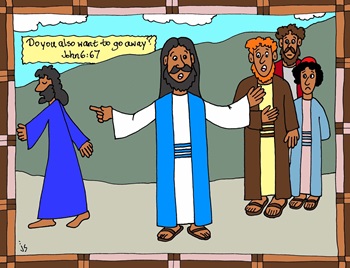
Ordy 21BsJohn 6:66 From this time many of his disciples turned back and no longer followed him.

It was the lowest point in Christ’s itinerant ministry. For three years, He had traveled up and down Galilee, gathering a great number of disciples and followers through His preaching, teaching, and healing. But now things were becoming gravely serious because He was meddling in people’s lives. Jesus was also notorious to some of the authorities, and His preaching kept hitting raw nerves. On this particular occasion, Christ called His followers’ faith into question, suggesting that some among them did not believe in His ministry and mission. And what was the outcome? The scripture states it very plainly: ‘Many of His disciples turned back and no longer followed Him.’

Christ continues to have a way of doing that same thing to Christians in our time, too. He still confronts us today, questioning our choices, demanding firm allegiance, and challenging our ways. We all want hope in our lives and a loving Savior, but we sometimes find it difficult to accept the belief baggage and lifestyle lessons that come along with our Christian faith. And for some folks, like those in today’s scripture (John 6:60-66), this is too hard to accept and apply, so they also sadly drift away from Jesus and His Church.

The good thing about this incident is that not all of the disciples abandoned Him. It was left to that good old boy, Peter, to encourage Jesus for a change. When His Savior asks the Twelve, “Will you also go away?”, the Big Fisherman gives the sweetest answer to Christ’s ears. “Lord, to whom shall we go? You have the words of eternal life.”

Our faith journey isn’t easy and sometimes we will be discouraged or deceitful, sinful or faithless, but we shouldn’t despair. Instead, we should look at how Christianity ends. We do have a wonderful Savior and the promise of everlasting life. We have the opportunity to serve Jesus and to joyfully enter into His loving presence forever. We may feel like going away at times, but His healing words will keep drawing us back to Him to receive forgiveness and acceptance, guidance and grace. And when all is said and done, isn’t that why we placed our faith in Christ in the first place?

Point to ponder: How difficult is following Jesus for me? How can Christ help me overcome this?

Prayer: Lord Jesus, we were once lost souls, whose lives had no real meaning or purpose. In Your mysterious way, You drew us towards You and helped us to give our hearts to You. Sometimes, being a Christian is very difficult and we don’t always get it right. We thank You for Your patience, forgiveness, and grace. Without them, we would perish from the Earth and have no hope. With them, we will delight in Your love forever, for You have the words of eternal life. In Your Holy Name, we gratefully pray. Amen.

John Stuart is a retired Scottish Presbyterian pastor now living in Knoxville, Tennessee.

Sabbath Psalms – Real Servants

Psalm 084sPsalm 84:10    Better is one day in your courts than a thousand elsewhere; I would rather be a doorkeeper in the house of my God than dwell in the tents of the wicked. (NIV)

I remember a time when we didn’t have a custodian on duty at the church I served on Sunday mornings. This meant that I had to make the coffee because I was one of the first to arrive at the church. I also swept up the leaves at the front door, which usually collected in between Sunday school and worship. Some church members even joked with me when they caught me sweeping those leaves, asking if I had been promoted! It was all good fun, enhancing the friendship and fellowship at the church. It also helped me maintain a balanced perspective and kept my spiritual feet on solid ground.

I love the highlighted verse from today’s psalm because it reminds us that the practice of humility in God’s service is far more precious to Him than any fame or fortune, power or prestige. Whatever we do for the church, we are meant to do it humbly, firstly because we love God and secondly because we want to simply help others, so that they may be attracted to serving God as well.

When we think about Christ coming among us, we may be humbled and touched by the simplicity of Christ’s entrance into the world. He didn’t come to Earth surrounded by thousands of angels and glorified by rulers from all over the world. He wasn’t born into a family esteemed with riches and made prosperous through their power. His first abode was a wooden shack, usually reserved for animals. His life was endangered almost immediately by King Herod, and his family became refugees for a while. Rather than being recognized as the King of kings and Lord of lords, He was just a mere baby, unprotected and vulnerable, with no power or authority.

This is why serving the Lord at church should never be something that we undertake in order to fulfill our ambitions or build up our esteem. We serve the Lord because we are His servants. He calls and expects us to humbly do His will. He wants us to fulfill His ministries and missions, as opposed to our own dreams and desires. In other words, what we do at church is not to glorify ourselves, but to humbly worship God.

Point to ponder: Whatever I do in church, is it to make me feel good or to glorify God’s goodness?

Prayer: Lord Jesus, we proclaim You as our King, making us Your subjects. Help us to recognize and accept that we serve You, so that You will be honored and glorified. Give us the heart of a humble servant and encourage us to attract others to serve You faithfully, too. In Your Holy Name, we pray. Amen.

John Stuart is a retired Scottish Presbyterian pastor now living in Knoxville, Tennessee.

Sunday Shorts – Sacred Vessels

Ordy 20BsJohn 6:54 Whoever eats my flesh and drinks my blood has eternal life, and I will raise them up at the last day. 

I remember the first time I actually saw a church communion set. It took place in an old Gothic-style church, just outside of Glasgow, Scotland. My High School class was on a long-sponsored walk one Saturday and the church was a resting place for all of the participants. As we entered the Fellowship Hall, the first thing that drew my attention were the pewter plates and ornate stacking trays with little glasses in them on a long table. I had never seen anything like them before, so my teacher explained that these were the Communion vessels which the church would be using during worship the next day.

I was intrigued and also impressed. The minister and a few elders were carefully cleaning the vessels which made me realize they were handling special things. It was only years later when I first formally took Communion as a church member that I understood similar vessels in my own congregation were regarded as sacred objects and treated with the utmost care.

When Jesus talked to His people about being the living bread and how His body and blood would nurture them, they didn’t fully understand what He meant. Some of them even regarded Jesus as being crazy and left His company of disciples. But for those who stayed with Him and experienced the Last Supper, they soon realized after His resurrection that Christ was referring to His sacred sacrifice on the Cross and that generations of Christians would experience that same holiness when they celebrated Communion in their own churches. It would become a sacred time of spiritually connecting people to Jesus and with one another.

No matter where or when I take Communion, it is still a sacred moment in my life. The minister and elders from that old church taught me something special that day long ago and I will always be grateful for how they showed the deepest respect for Christ as they carefully cleaned those beautiful vessels.

Point to ponder: How do I experience the sacredness of Communion in my church?

Prayer: Lord Jesus, thank You for sacrificing Yourself for all our sins, as well as for reconnecting humanity to You through Communion. Help us to respect such a beautiful celebration as special and sacred in our lives. In Your Holy Name, we humbly pray. Amen.


John Stuart is a retired Scottish Presbyterian pastor now living in Knoxville, Tennessee.

Sabbath Psalms – Wise Words

Psalm 111sPsalm 111:10 Revering the Lord is where wisdom begins; all who follow God’s teachings have good sense. To God belongs everlasting worship.

One of the sacred things that we’ve sadly lost is reverence for God. In an age and society where wisdom and knowledge have largely been replaced with self-opinion and prejudice, we tend to put God on the same level as ourselves, expecting Him to follow and approve our ways. We put ourselves at the center of our own universes and shape God into being a benevolent bystander, forgetting that we actually live in His existence and under His sovereignty.

The writer of today’s psalm reminds us that the smartest thing we can do in life is to respect and worship God. No matter how big, how powerful, or how accomplished we think we are, God is always infinitely greater than anything we can imagine, do, or fulfill. It is very humbling to realize that God can do anything better than us and that we are all just creatures who exist in His creation. When we understand and accept this, then we will begin to realize what our lives are for: to worship God and enjoy Him forever.

A lot of the world’s foolishness, as well as its wickedness, originates when people are besotted with themselves, their power, and esteem. Putting ourselves first before God panders to our pride, supplements our selfishness, and activates our arrogance to such a degree that we consider ourselves to be little gods and seek equality with Him. An example of this occurs when we talk about the ‘kindom’ of God, rather than the kingdom which Jesus constantly expressed. Kindom places us all on the one level, whereas kingdom reminds us that we are subservient to God. Kindom makes us look wiser and greater in our own eyes; kingdom reveals to us Christ’s wisdom and personal knowledge about God.

Point to ponder: How do I revere and worship God wisely?

Prayer: Lord Jesus, You revealed to us many truths about God in order to help us gain a greater knowledge of who God is and what we are. Help us to embrace Your ideas and ways rather than holding tightly and foolishly to our own. In Your Holy Name, we humbly pray. Amen.

John Stuart is a retired Scottish Presbyterian pastor now living in Knoxville, Tennessee.

Sunday Shorts – For the World

Ordy 19BsJohn 6:51 “I am the living bread that came down from heaven. Whoever eats this bread will live forever. This bread is my flesh, which I will give for the life of the world.”

The main Olympics have come to an end, but soon the Paralympics will begin. Both of these major worldwide events invite athletes from all over the globe to compete against their peers in their specialized sports. It’s a remarkable spectacle over several weeks and one that truly represents the agility, diversity, and ability of each participant. They give their all for their represented nation in the hope of winning a medal not just for themselves, but for the people they represent. The athletes are focused on their chosen events and take a great deal of pride in performing at their fastest, strongest, and best. When they succeed and climb on the podium to receive their well-deserved medals, they are elated and the crowd of watching spectators cheer and applaud them. They have given their lives to their sport, so they bask in their triumphs and celebrate their victories which have made them famous.

Jesus also gave His life, not for fame or a nation, but for the entire world. The only podium that He was given was nailed beneath His crucified feet to prolong His painful death. The only medal He received was a crown of thorns that caused Him to bleed profusely. The crowd of spectators around and below the Cross, jeered and attacked Him. His enemies were elated as He was humiliated. His foes were thankful because His death was disgraceful. And yet, despite the spite and however great the hate, Jesus gave His all and died for them. He came down from heaven and offered them the bread of eternal life; His broken body on the Cross which He freely gave for the life of the world.

After the Olympics are over, the athletes will return to their own nations to be lauded and applauded for a while. Eventually, their achievements will become a part of sporting history but within two or three generations, they will largely be forgotten. Christ, however, will still be praised for giving His life for the world until Time and History are no more. And then Jesus will be eternally praised and celebrated by those who choose to follow Him faithfully and serve Him daily with their lives. Remember, Christ gave all so that we might gain all. Hallelujah!

Point to ponder: How did Christ’s sacrifice succeed in earning me my salvation?

Prayer: Lord Jesus, Your victory over sin and death has blessed us with forgiveness and faith. We live in hope because You won the battle for us. We are thankful for Your sacrifice and grateful for Your Love. In Your Holy Name, we cheerfully pray. Amen.

John Stuart is a retired Scottish Presbyterian pastor now living in Knoxville, Tennessee.