Sabbath Psalms – Love and Hate

Psalm 045sPsalm 45:6 Your throne, O God, will last for ever and ever; a scepter of justice will be the scepter of your kingdom. (NIV)

I like the ancient word that is used in this verse for ‘justice’. In Hebrew, it’s ‘misor,’ which refers to something that is geographically flat like a plain or level like a plateau. It’s the equivalent of us talking about fairness where everyone is given an equal opportunity because we’re all on the same level playing field. There is no advantage given to anyone because of their strength, esteem, or power. Everybody is treated the same, so that justice can prevail. There is no special favor or consideration given to one group over another. Justice occurs truthfully and honestly, which is why some courts have a statue of justice being blind. There is no favoritism or patronage given; justice impartially seeks the truth which is why it is a symbol of God’s everlasting sovereignty.

In a world that is beset with powerful liars and chronic misinformation, the truth can often be buried under a mountain of lies. People are manipulated by brazen leaders who twist the truth into what their followers want to hear, no matter how absurd it sounds. It’s a form of evil that repulses God and damages the world. Blindly accepted absurdities can turn into acceptable atrocities where justice is ignored, and prejudice is fully displayed. The terrifying lynchings in our own recent history testify to the wickedness of ordinary people who were absolutely convinced they were supporting and doing the right thing.

If justice is a symbol of God’s sovereignty, then there will come a time when all of those liars, manipulators, and unconstrained leaders will be made accountable in eternity, as well as those who blindly followed them. The misor of God will level and expose everything, so those who should have known better or who deluded themselves will also be held accountable for ignoring the truth and embracing evil.

Point to ponder: What does justice mean to me? Is it the same as what it means to God? Am I guilty of following liars and spreading lies?

Prayer: Lord Jesus, help us to see the world through Your eyes and to seek God’s justice across this planet. Encourage us to express the truth in the face of lies and to confront corruption with faith, hope, and love. In Your Holy Name, we pray. Amen.

John Stuart is a retired Scottish Presbyterian pastor now living in Knoxville, Tennessee.

Sabbath Psalms – Real Servants

Psalm 084sPsalm 84:10    Better is one day in your courts than a thousand elsewhere; I would rather be a doorkeeper in the house of my God than dwell in the tents of the wicked. (NIV)

I remember a time when we didn’t have a custodian on duty at the church I served on Sunday mornings. This meant that I had to make the coffee because I was one of the first to arrive at the church. I also swept up the leaves at the front door, which usually collected in between Sunday school and worship. Some church members even joked with me when they caught me sweeping those leaves, asking if I had been promoted! It was all good fun, enhancing the friendship and fellowship at the church. It also helped me maintain a balanced perspective and kept my spiritual feet on solid ground.

I love the highlighted verse from today’s psalm because it reminds us that the practice of humility in God’s service is far more precious to Him than any fame or fortune, power or prestige. Whatever we do for the church, we are meant to do it humbly, firstly because we love God and secondly because we want to simply help others, so that they may be attracted to serving God as well.

When we think about Christ coming among us, we may be humbled and touched by the simplicity of Christ’s entrance into the world. He didn’t come to Earth surrounded by thousands of angels and glorified by rulers from all over the world. He wasn’t born into a family esteemed with riches and made prosperous through their power. His first abode was a wooden shack, usually reserved for animals. His life was endangered almost immediately by King Herod, and his family became refugees for a while. Rather than being recognized as the King of kings and Lord of lords, He was just a mere baby, unprotected and vulnerable, with no power or authority.

This is why serving the Lord at church should never be something that we undertake in order to fulfill our ambitions or build up our esteem. We serve the Lord because we are His servants. He calls and expects us to humbly do His will. He wants us to fulfill His ministries and missions, as opposed to our own dreams and desires. In other words, what we do at church is not to glorify ourselves, but to humbly worship God.

Point to ponder: Whatever I do in church, is it to make me feel good or to glorify God’s goodness?

Prayer: Lord Jesus, we proclaim You as our King, making us Your subjects. Help us to recognize and accept that we serve You, so that You will be honored and glorified. Give us the heart of a humble servant and encourage us to attract others to serve You faithfully, too. In Your Holy Name, we pray. Amen.

John Stuart is a retired Scottish Presbyterian pastor now living in Knoxville, Tennessee.

Sunday Shorts – Sacred Vessels

Ordy 20BsJohn 6:54 Whoever eats my flesh and drinks my blood has eternal life, and I will raise them up at the last day. 

I remember the first time I actually saw a church communion set. It took place in an old Gothic-style church, just outside of Glasgow, Scotland. My High School class was on a long-sponsored walk one Saturday and the church was a resting place for all of the participants. As we entered the Fellowship Hall, the first thing that drew my attention were the pewter plates and ornate stacking trays with little glasses in them on a long table. I had never seen anything like them before, so my teacher explained that these were the Communion vessels which the church would be using during worship the next day.

I was intrigued and also impressed. The minister and a few elders were carefully cleaning the vessels which made me realize they were handling special things. It was only years later when I first formally took Communion as a church member that I understood similar vessels in my own congregation were regarded as sacred objects and treated with the utmost care.

When Jesus talked to His people about being the living bread and how His body and blood would nurture them, they didn’t fully understand what He meant. Some of them even regarded Jesus as being crazy and left His company of disciples. But for those who stayed with Him and experienced the Last Supper, they soon realized after His resurrection that Christ was referring to His sacred sacrifice on the Cross and that generations of Christians would experience that same holiness when they celebrated Communion in their own churches. It would become a sacred time of spiritually connecting people to Jesus and with one another.

No matter where or when I take Communion, it is still a sacred moment in my life. The minister and elders from that old church taught me something special that day long ago and I will always be grateful for how they showed the deepest respect for Christ as they carefully cleaned those beautiful vessels.

Point to ponder: How do I experience the sacredness of Communion in my church?

Prayer: Lord Jesus, thank You for sacrificing Yourself for all our sins, as well as for reconnecting humanity to You through Communion. Help us to respect such a beautiful celebration as special and sacred in our lives. In Your Holy Name, we humbly pray. Amen.


John Stuart is a retired Scottish Presbyterian pastor now living in Knoxville, Tennessee.

Sabbath Psalms – Wise Words

Psalm 111sPsalm 111:10 Revering the Lord is where wisdom begins; all who follow God’s teachings have good sense. To God belongs everlasting worship.

One of the sacred things that we’ve sadly lost is reverence for God. In an age and society where wisdom and knowledge have largely been replaced with self-opinion and prejudice, we tend to put God on the same level as ourselves, expecting Him to follow and approve our ways. We put ourselves at the center of our own universes and shape God into being a benevolent bystander, forgetting that we actually live in His existence and under His sovereignty.

The writer of today’s psalm reminds us that the smartest thing we can do in life is to respect and worship God. No matter how big, how powerful, or how accomplished we think we are, God is always infinitely greater than anything we can imagine, do, or fulfill. It is very humbling to realize that God can do anything better than us and that we are all just creatures who exist in His creation. When we understand and accept this, then we will begin to realize what our lives are for: to worship God and enjoy Him forever.

A lot of the world’s foolishness, as well as its wickedness, originates when people are besotted with themselves, their power, and esteem. Putting ourselves first before God panders to our pride, supplements our selfishness, and activates our arrogance to such a degree that we consider ourselves to be little gods and seek equality with Him. An example of this occurs when we talk about the ‘kindom’ of God, rather than the kingdom which Jesus constantly expressed. Kindom places us all on the one level, whereas kingdom reminds us that we are subservient to God. Kindom makes us look wiser and greater in our own eyes; kingdom reveals to us Christ’s wisdom and personal knowledge about God.

Point to ponder: How do I revere and worship God wisely?

Prayer: Lord Jesus, You revealed to us many truths about God in order to help us gain a greater knowledge of who God is and what we are. Help us to embrace Your ideas and ways rather than holding tightly and foolishly to our own. In Your Holy Name, we humbly pray. Amen.

John Stuart is a retired Scottish Presbyterian pastor now living in Knoxville, Tennessee.

Sunday Shorts: Bread of Life

Ordy 18BsJohn 6:35 Then Jesus declared, “I am the bread of life. Whoever comes to me will never go hungry, and whoever believes in me will never be thirsty. (NIV)

Recently, our whole family went out for dinner at a special pizza restaurant. The menu was amazing, and we all looked forward to eating our chosen meals. Our two-year-old granddaughter, Ellie, was there, too, but as she couldn’t read the menu, we just ordered her a plain cheese pizza.

When the server came round with some garlic bread as an appetizer, Ellie enjoyed a piece and declared it to be ‘yummy.’ She ate several more pieces, copying her older cousin Andrew, but when the server arrived with the pizzas, she didn’t want any. All that she desired to eat was more bread. She loved the taste and the texture, so she didn’t want to replace it with something else. While we all ate our chosen meals, Ellie was content to eat what was left of the bread. She knew what she liked and didn’t want to change it for anything.

When I read today’s verse where Jesus declares Himself to be the Bread of Life, I wonder how many of us are satisfied with what He has to offer us spiritually? Are we ready to accept all that Jesus brings to the table of our lives, and is it sufficient for our spirits and souls? Once we taste the bread He offers, are we content to keep feeding from Christ’s life and teaching, or do we set His pieces aside each time we come across something spiritually novel or new?

When Jesus spoke to His people about being the Bread of Life, He lived in an age where Roman emperors placated the unruly mobs in Rome with bread and circuses. The temple at Jerusalem was also a place where the best bread in the nation was religiously displayed and replaced every week, so when Jesus said He was the Bread of Life, He was radically declaring Himself to be better than the emperor and greater than the temple. It was a bold statement and one that would cost His life. Christ sought to inform His followers that as far as spiritual nourishment was concerned, He was more than enough for all of them.

Today, Jesus speaks to us through the Gospels with the same declaration, telling us in this 21st century that He is still all we need to nourish our spirits. He has invited us all to taste and see that the Lord is good; all we must do is consume what Christ has to offer.

Point to ponder: How has Jesus become my Bread of Life?

Prayer: Lord Jesus, You offer to sustain us by becoming our Bread of Life. Encourage us to feed on Your words and ways that will sustain our souls and replenish our spirits. In Your Holy Name, we thankfully receive and pray. Amen.

John Stuart is a retired Scottish Presbyterian pastor now living in Knoxville, Tennessee.

Sunday Shorts – Enough to Eat

Ordy 17BsJohn 6:12 When they had all had enough to eat, he said to his disciples, “Gather the pieces that are left over. Let nothing be wasted.” (NIV)

I like what Jesus does here – He provides food for hungry people and doesn’t let anything left over get wasted. He is declaring with this miracle that food is a human right, so hunger is something that should not happen to anyone in our world.

In recent years, the need for Food Banks has increased all over the world. In Appalachia, parents and grandparents are struggling to provide enough food for the children in their families. Across the world in war zones like the Ukraine and Gaza, food deprivation is being used as a weapon by inhumane leaders. And wherever natural disasters occur, as well as famine, millions of people try to survive on meager food resources. If Jesus were around today, how may loaves and fish would He have to break and share to provide more than enough for everybody on this planet?

Sadly, there are also ‘Christian’ political leaders who want to halt hungry schoolchildren getting free meals or punish those kids whose parents haven’t paid their expected food bills. I wonder what those leaders would do if their own free political breakfasts, lunches, and dinners were taken away from them? I wonder how they would react if they realized that Jesus gave the example of providing enough food, and more besides, for those who were hungry? To deprive children of their basic nutritional needs is to harm them, something which Jesus said would be severely punished by God to those who caused harm to any little ones.

So, what can we do to help? Support our local food banks and pantries, community ministries and charities that focus on providing food and water to those in need. We can also support the great work of the World Central Kitchen with a monthly gift which ensures food being provided, cooked, and distributed to people all over the globe. It’s a remarkable organization and one which Christ Himself would have supported to ensure others have enough to eat and that nothing is wasted.

Point to ponder: As a follower of Christ, which food ministries do I support?

Prayer: Lord Jesus, You showed the example of how to help others in need of food. You did this several times for thousands of people, initiating food ministry events that included sharing Your Gospel. You provided for those who were hungry; help us to do the same whenever and wherever we can. In Your Holy Name, we humbly pray. Amen.


John Stuart is a retired Presbyterian pastor now living in Knoxville, Tennessee.

Sabbath Psalms – On the Edge – Psalm 14

Psalm 014sPsalm 14:1 The fool says within himself, “God does not exist.” They are immoral, their deeds are disgraceful; there is nobody who does good things.
Like everyone else, I struggle with my faith at times. I’ve always believed in God as far back as I can remember, but it’s what I believe in God that keeps changing. When I first became a Christian, I wanted to convert the entire world. I actually preached on street corners in Scotland and sang hymns outside Glasgow pubs. I was fearless for Christ and wanted to show the world what unbelievers were missing. I guess I must have appeared like a religious freak to most of my drunken audience, but I was on fire for the Lord, and it didn’t bother me.

These days, I would find it tough and perhaps be too embarrassed to preach outside a city bar. I got in enough trouble preaching from the relative safety of a church pulpit. Sometimes my zeal to get the Gospel message across caused some people to get upset and leave the church. A sermon that stings is sometimes too close to the truth, even for me.

Faith is a precious gift from God, but sometimes we foolishly take it for granted or allow ourselves to cast it aside in order to indulge in sinful things. We stumble on the edge of foolishness which, for some people, can lead to affluence and unbelief, indifference and apostasy. I’m not one of those who subscribes to the belief that ‘once saved means always saved.’ I think that we can lose our salvation if we lose ourselves to the wiles of the world, which is why Jesus says in Mark’s Gospel: “Whoever has will be given more; whoever does not have, even what he has will be taken from him.”(Mark 4 v 25). If we were saved for all time, we could give our hearts to Christ at the age of three and spend the next 97 years doing whatever we liked.

When I preached the message on Sunday mornings, I was very much aware that we’re all just living on the edge of eternity. Who knows what tomorrow may bring, so that is why we all need to get our hearts and minds, our lives and ways right with God through Christ today. To do anything else or to leave it for another time is plainly foolish and just as spiritually harmful as the person with no belief at all.

Point to ponder: What things disrupt my belief in God? How does Christ restore me?

Prayer: Lord Jesus, let this be the day when we all completely surrender our lives to You. Let this be the time when we allow You totally into our hearts, to change us forever. Enable us not to keep back anything or any part of us from You. Take away our foolishness and fill us with true faith. In Your Holy Name, we humbly pray. Amen.

John Stuart is a retired Scottish Presbyterian pastor now living in Knoxville, Tennessee.

Sunday Shorts: Listening, But Not Hearing

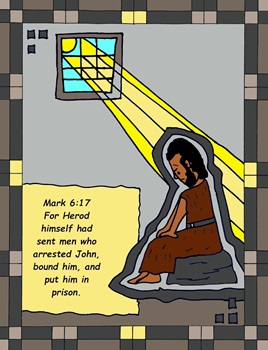
Ordy 15BsMark 6:20 Herod feared John and protected him, knowing him to be a righteous and holy man. When Herod heard John, he was greatly puzzled; yet he liked to listen to him. (NIV)
Being a Scottish preacher in American churches can be quite novel at times. For some reason, folks like to listen to my Scots accent because they find it to be quite lyrical. I used to think this was a great thing and relished each time I was asked to preach in a different pulpit. Over the years, however, I realized that my accent could sometimes get in the way of the Gospel message. People in the pews liked to listen to how I preached but didn’t absorb the sermon. Sometimes at the church door after the worship service, someone would say: “I loved your Scottish accent, but I didn’t understand what you said.”

King Herod must have felt the same with John the Baptist. The cruel king had imprisoned John for preaching against his marriage. Herod’s wife was greatly offended, so Herod had the fiery preacher arrested and thrown into a jail below his palace.

Herod, however, did not neglect John. He liked to listen to the preacher, although he didn’t fully understand what John talked about. Perhaps the prophet preached on the Kingdom of God which Herod would think rivalled his own sovereignty. Or maybe John talked about repentance for being sinful which Herod totally ignored. Whatever the case, Herod missed his opportunity to be reconciled to God. He liked listening to John, but he never truly heard a word which could have changed his life forever.

Some folks are like that, too. They know about Jesus and have perhaps listened to some of His teaching. Unfortunately, instead of fully embracing Him as their Savior and Lord, they just label Him as another historical holy man whose sermons were quaint and applicable to the past, but not relevant in today’s world. In other words, they listen but do not hear, which is why Jesus constantly told His listeners, “Whoever has ears to hear, let him hear.”

Point to ponder: Do I like to just listen to what Jesus had to say, or do I hear how His words challenge me to change my ways?

Prayer: Lord Jesus, help us to be truly open to Your Gospel message and holy teachings. Challenge our lives so that we may change our ways by applying Your words in our daily lives. In Your Holy Name, we humbly pray. Amen.

Sunday Shorts: The Grand Delusion

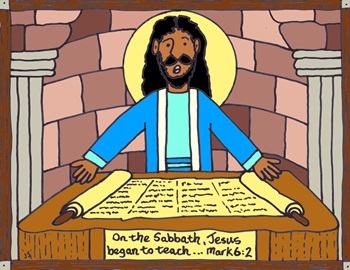
Ordy 14BsMark 6:2 On the Sabbath, Jesus started teaching in the synagogue, and those who heard him were astounded.

“Where did he learn these things?” they asked. “What kind of wisdom has he been given? And what about these amazing miracles he is performing?

Over many years of being a pastor, one of the saddest things about ministry that I experienced was the number of people who took their faith for granted and attended church very infrequently. No matter how hard I tried to encourage them to be at worship on Sundays, they always had something else to do with family or friends. They simply believed that God would indulge their lack of dedication to His Son. God would just turn a blind eye and allow them to do what they wanted.

Nothing could be further from the truth. Jesus, who knows God more personally than we could ever imagine, was always in synagogue on the Sabbath. He wouldn’t dishonor God by neglecting to worship and study on the special day set aside for glorifying His Father. He could have been exempt and gone elsewhere. He could have communicated with God in the flowered fields and hiking the hills. He could have enjoyed the company of family and friends, but instead He chose to be in God’s House with God’s people worshipping God.

There are many people who have given up on church attendance and a new generation of what’s called ‘nones’ has arisen. They believe in their own version of God, a Supreme Being who watches over them and who will receive them into His Kingdom after death. That’s the biggest lie the devil has spread and sadly, many of the nones will not realize it until it’s too late.

If weekly worship in God’s House was good enough for Jesus, then shouldn’t it be our priority, too?

Point to ponder: How often do I attend church on Sundays? What would Jesus do?

Prayer: Lord Jesus, we have made up our own image of God to be an indulgent father or grandfather who lets us do what we want and whose infinite compassion will overlook our lack of faith. You never said that. You never taught it. You never lived that way, either. Teach us with Your astounding knowledge and guide us back into God’s House on a weekly basis, so that we may truly be Your followers and God’s servants. In Your Holy Name, we pray. Amen.

John Stuart is a retired Scottish Presbyterian pastor now living in Knoxville, Tennessee.

Midweek Message: The Other Good Samaritan

01s The Other Good SamaritanLuke 17:15-16 One of them, when he saw he was healed, came back, praising God in a loud voice.  He threw himself at Jesus’ feet and thanked him—and he was a Samaritan. (NIV)

In many years of ministry, I have seen people who were truly thankful to God for help and healing. Their lives were changed in a single moment, so they devoted themselves to worshiping and serving God for the rest of their days. I, also, am one of them because when God heard my cry for help about my alcoholism, He graciously answered my anxious prayer by restoring me physically, mentally, and above all, spiritually. I was made into a new person and decided to follow Jesus for the rest of my life.

The other Good Samaritan in the Bible passage from Luke 17:11-19 does the same. He is one of ten lepers who is miraculously healed by Jesus. He is sent to get this confirmed by a local priest so that he can rejoin his family and community. But as soon as he realizes that he has been healed of that terrible painful, disfiguring disease, he stops running away from Christ and returns to give Him thanks. He knows the source of his cure, so rather than going immediately to his priest and family, he humbly thanks Jesus by falling on his knees before Him, glorifying and praising God loudly.

Jesus appreciates this act of gratitude, but He is also perplexed. The other nine are nowhere to be seen, even though they are all His own people. Only this Samaritan is grateful for what has occurred; only this outsider recognizes what Christ has miraculously done for al ten lepers.

I have also seen people who have been restored physically, whose prayers for healing have been answered perfectly, whose worries and anxieties, issues and illnesses have been positively dealt with by God and yet they remain thankless. Instead of returning to Christ and worshiping Him, they take their cure for granted and get on with their lives, focusing on themselves first and ignoring any notion of recognizing what God has mercifully done in them. It’s sad to see and very disappointing, but Christ also experienced this many times throughout His life.

Wherever we are and however we feel today, let’s not forget what Christ has done in each of our lives. Let’s be thankful that we exist even for another day and make time to be grateful to God for all that He has graciously, and perhaps even miraculously, done for us.

Point to ponder: How has God positively changed my life? How do I show Him my gratitude?

Prayer: Lord Jesus, there are many times that You have helped us throughout our lives. You have listened to our prayers and enabled us to overcome illnesses and issues that have seriously troubled us. May we never take Your compassion and grace for granted. May we also seek to worship and glorify You for the rest of our days. In Your Holy Name, we pray. Amen.